
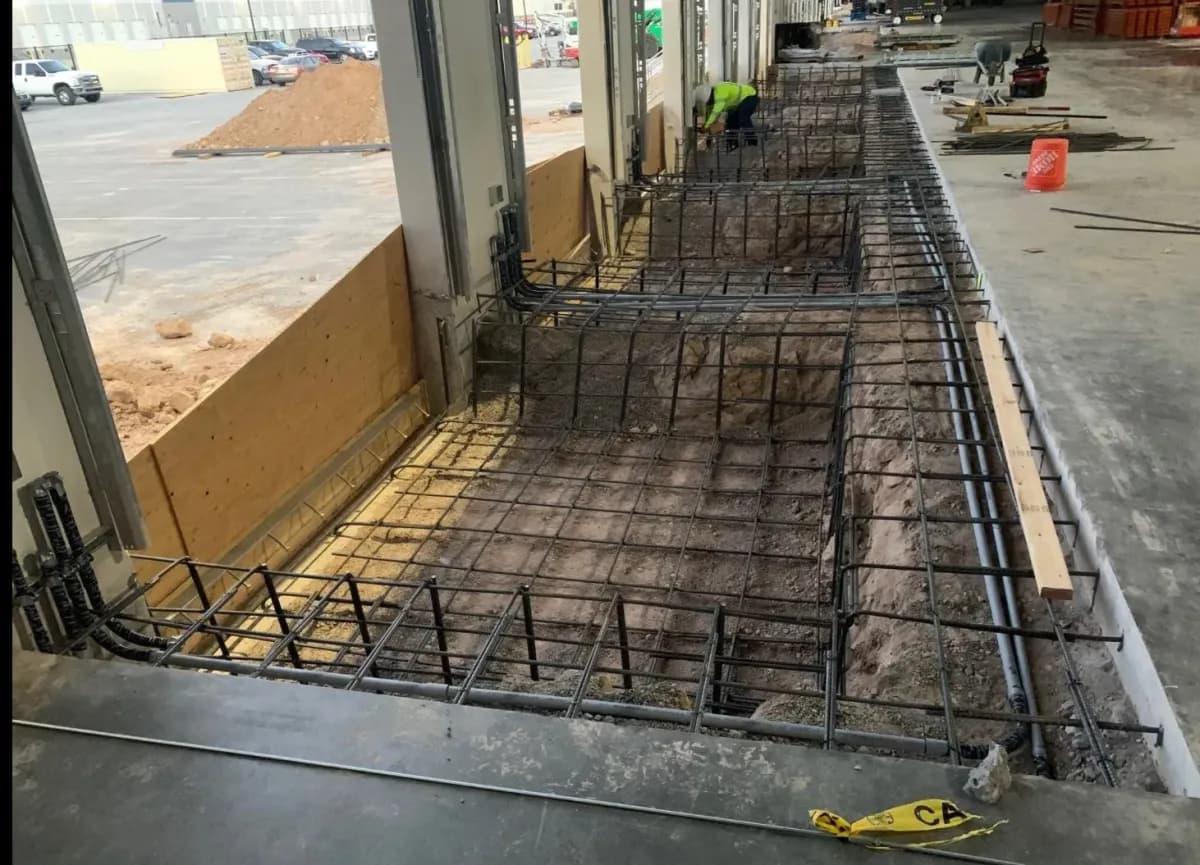
About HVAC and Mechanical Pad Coordination
Rooftop units, condenser pads, and mechanical yard equipment all need concrete underneath them, and that concrete has to be engineered for the equipment it supports — not poured as an afterthought once the mechanical contractor shows up. We do not self-perform HVAC installation or refrigerant work; that stays with a licensed mechanical contractor. What we do is source and hold accountable the HVAC trade as part of a coordinated concrete and site package, and we build every pad, curb, and equipment slab to the load and access specifications the mechanical scope actually requires.
In practice, this means we get involved early. Condenser pads for a rooftop package unit need to sit at a specific height and location relative to roof penetrations and structural framing. Ground-mounted mechanical yard equipment for warehouses and distribution centers along the US-75 corridor needs housekeeping pads sized to the manufacturer's anchor bolt pattern, often with vibration isolation built into the pour. Get the pad dimensions, embed locations, or elevation wrong and the mechanical contractor either can't set the unit or has to shim it in a way that shortens equipment life. We coordinate directly with the mechanical engineer's drawings before we pour, not after a unit shows up on site that doesn't fit.
Because we source the HVAC subcontractor rather than self-performing that trade, property owners and general contractors get one point of contact for both the concrete and the mechanical scope on a given project, without needing to manage two separate vendor relationships and two separate schedules. We hold the HVAC sub to the same schedule and quality accountability we apply to our own crews, and we sequence the pad pour, curb work, and mechanical set so the trades don't collide on site.
This coordination model shows up most often on new warehouse and industrial construction, tenant improvement projects where rooftop units are being replaced or added, and retail buildouts where a new HVAC package needs a housekeeping pad poured before equipment delivery. Whether the concrete is part of a larger warehouse or shopping center build we're already delivering, or a standalone mechanical pad request from a facility manager, the coordination approach is the same: concrete built to the mechanical spec, and a licensed HVAC sub held to the schedule.
What’s Included
- Condenser and rooftop unit curb and pad construction
- Ground-mounted mechanical equipment housekeeping pads
- Anchor bolt pattern and embed coordination with mechanical drawings
- Vibration isolation pad design where specified
- Sourcing and schedule management of a licensed HVAC subcontractor
- Sequencing coordination between concrete pour and equipment set
- Site access planning for equipment delivery and crane set
Frequently Asked Questions
Do you install HVAC equipment yourselves?
No. We do not self-perform HVAC or refrigerant work, which requires a licensed mechanical contractor. We source and manage a licensed HVAC subcontractor as part of a coordinated concrete and mechanical package, and we build the pads and curbs to the mechanical spec.
Why does concrete for HVAC pads need to be coordinated in advance?
Condenser pads, rooftop curbs, and equipment slabs need specific dimensions, elevations, and anchor bolt patterns that come from the mechanical engineer's drawings. Pouring generic pads without that coordination often means the equipment doesn't fit correctly or has to be shimmed, which shortens its service life.
Can you handle a standalone mechanical pad without a larger construction project?
Yes. We regularly pour standalone condenser pads and mechanical yard equipment slabs for facility managers replacing or adding HVAC equipment, without requiring a full construction scope.
Who is responsible if the HVAC subcontractor's work has an issue?
As the coordinating party on the project, we hold the HVAC subcontractor accountable to the same schedule and quality standards we apply to our own crews, so the property owner or general contractor has a single point of contact rather than managing the mechanical trade directly.
Do you handle vibration isolation for mechanical equipment pads?
Yes, when the equipment manufacturer or mechanical engineer specifies it. We build isolation into the pad design for ground-mounted compressors and heavy mechanical equipment where vibration transfer is a concern.