
About MEP Trade Coordination
Mechanical, electrical, and plumbing rough-in almost always intersects with concrete before a building is closed up: conduit sleeves through footings, electrical duct bank encasement, underslab plumbing trenching, and floor box embeds all have to happen at the right sequence relative to the pour. We do not self-perform electrical or plumbing work — that stays with licensed MEP subcontractors — but we manage the concrete side of that intersection and source the trades so the schedule holds together instead of falling apart at the handoff points.
On a typical warehouse or industrial slab in Collin County, underslab plumbing and electrical conduit have to be roughed in, inspected, and backfilled before we place the vapor barrier and pour the floor. Miss that sequence and you're either cutting a finished slab to add a missed sleeve, which nobody wants on a warehouse floor with flatness tolerances, or delaying the pour while a plumbing sub scrambles to catch up. We build the pour schedule around MEP rough-in inspection windows from the start, rather than treating underground utilities as something to work around after the fact.
Duct bank encasement for electrical service — common on distribution centers and manufacturing buildings needing heavy power — requires concrete placed to specific cover depths and separation requirements around conduit runs. We coordinate directly with the electrical engineer's one-line and conduit routing before pouring, and we hold the electrical subcontractor to the schedule the same way we hold our own crews accountable, so duct bank work doesn't become the item that stalls an entire site development timeline.
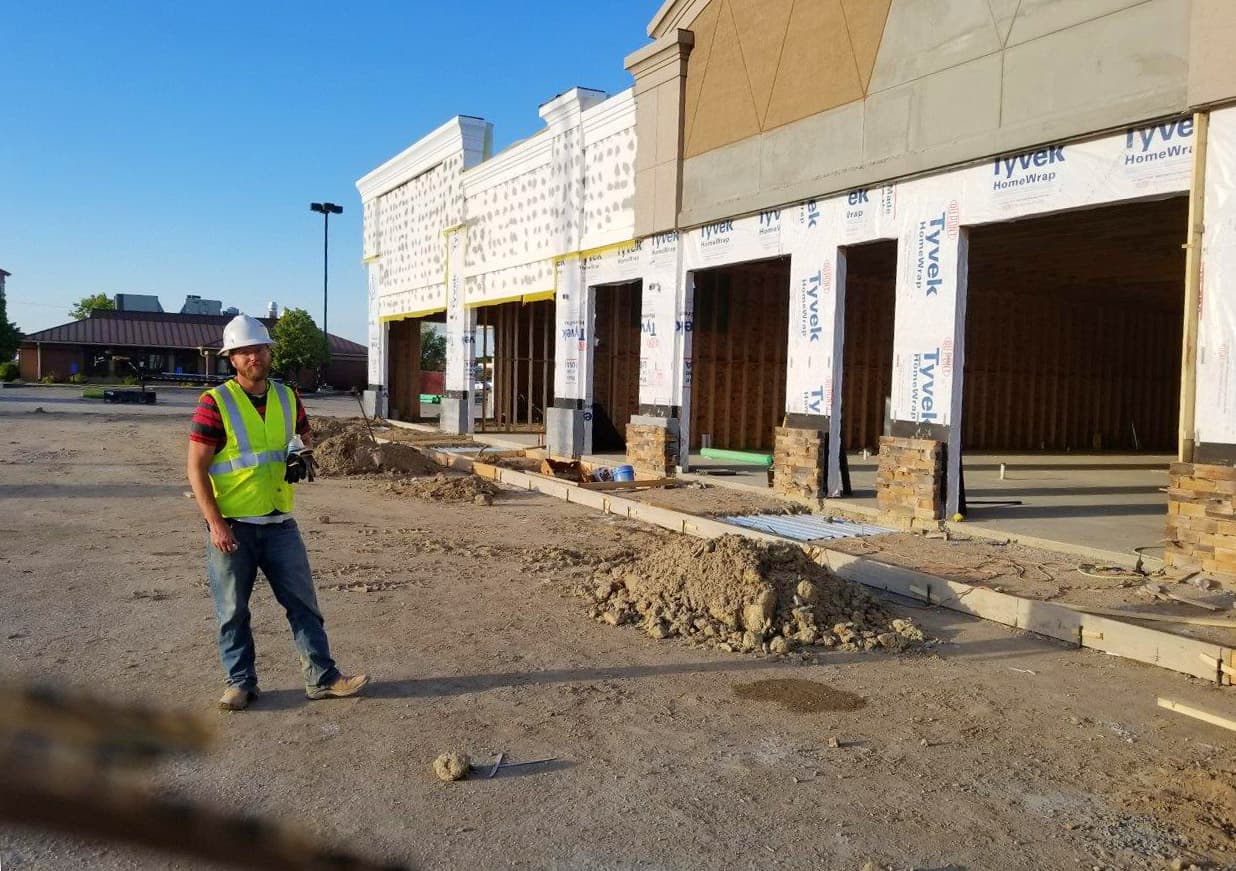
For tenant improvement and retail buildout projects, MEP coordination usually means floor box and in-slab conduit placement for a new layout, or saw-cutting and patching an existing slab to add a utility run a new tenant needs. We handle both the concrete work and the trade sourcing, so a property owner or general contractor gets one accountable scope instead of chasing three separate subcontractors to align on a single utility trench.
What’s Included
- Underslab plumbing and electrical conduit sleeve placement
- Electrical duct bank encasement to engineer cover and separation specs
- Floor box and in-slab conduit placement for tenant buildouts
- Saw-cutting and patching for utility runs added to existing slabs
- Pour scheduling structured for MEP rough-in inspection windows
- Sourcing and schedule management of licensed MEP subcontractors
- Coordination with electrical engineer conduit routing and one-line drawings
Frequently Asked Questions
Do you do electrical or plumbing work yourselves?
No. We do not self-perform electrical or plumbing work, which requires licensed MEP subcontractors. We manage the concrete side of that scope — sleeves, trenching, duct bank encasement, and embeds — and we source and schedule the MEP trades as part of a coordinated package.
What happens if underground utilities are missed before a slab is poured?
Missing a sleeve or conduit run before the pour usually means cutting the finished slab to add it, which is expensive and can affect floor flatness on warehouse floors. We build the pour schedule around MEP rough-in inspection windows specifically to avoid this.
Can you handle duct bank encasement for heavy electrical service?
Yes. We coordinate with the electrical engineer's conduit routing and cover depth requirements and pour duct bank encasement to spec for distribution centers, manufacturing buildings, and other high-power commercial projects.
Do you handle floor box or conduit placement for tenant improvement projects?
Yes. For retail and office buildouts, we place floor boxes and in-slab conduit for new layouts, and we also handle saw-cutting and patching when an existing slab needs a new utility run added for a tenant's build.
Why coordinate MEP trades through the concrete contractor instead of managing them separately?
Because the sequencing between underground utilities and the pour is the highest-risk part of the schedule. Coordinating both under one accountable scope avoids the finger-pointing that happens when a concrete crew and an MEP sub are scheduled independently and the timing doesn't line up.